Automated, Effective Fish Feeding

Developing and prototyping a manifold selector valve for automated waterborne fish feeding.

This work was completed as part of course requirements for MIT Course 2.76: Global Engineering. Professor Amos Winter is the instructor. My teammates were Conor Briggi, Anna Duncan, Penelope Herrero-Marques, and Francisco Sepulveda. This work was in collaboration with our industry partner, Innovasea Systems Inc.

Update, May 6, 2024 - This work was accepted to the ASME IDETC/CIE2024 Conference taking place in Washington DC in August 2024.

FishFeed

2.76: Global Engineering is a course which seeks to enable students with the tools and techniques required to design products with global impact. There is special emphasis on stakeholder dyanmics, multi-market opportunities, humanitarian impact, culture considerations, and engineering science.

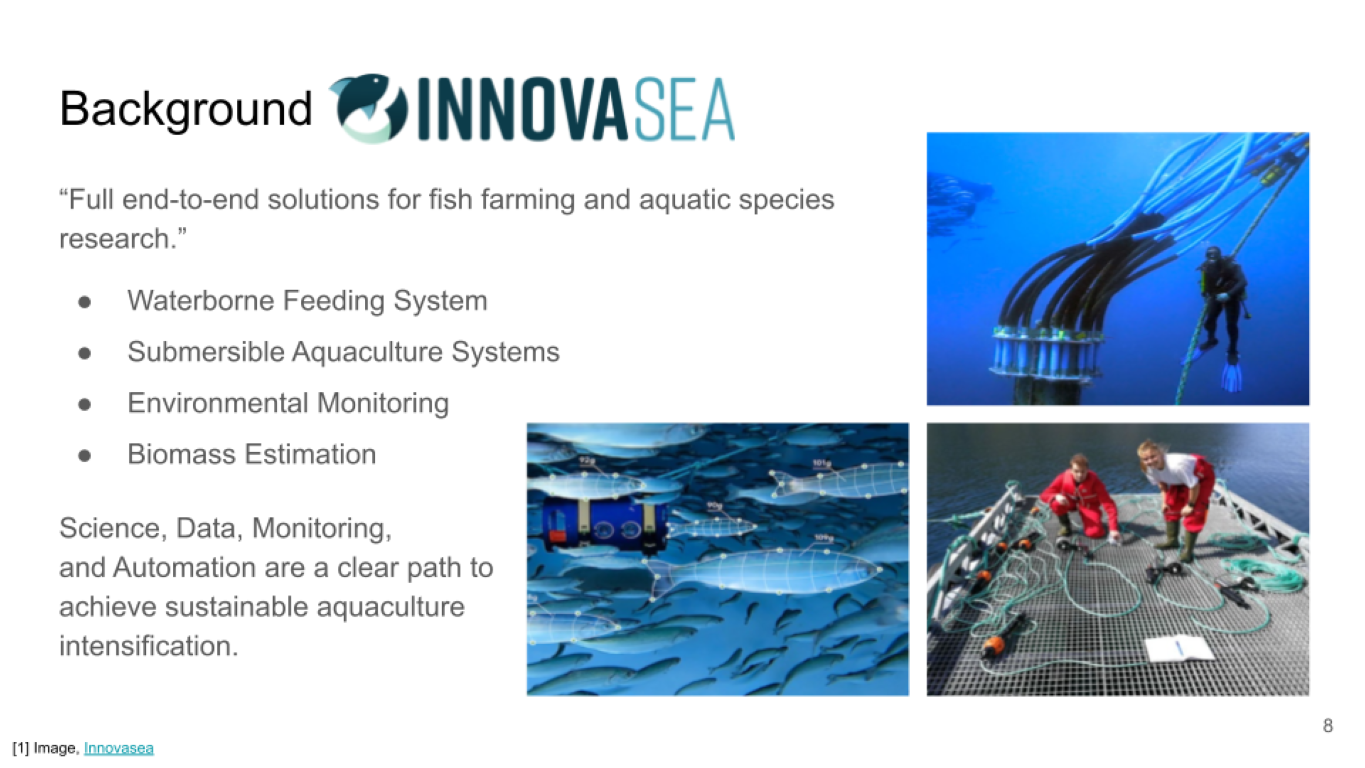
To ensure the relevance of our technology, our team was paired with Innovasea Systems Inc. who would carefully guide our engineering efforts throughout the semester.
FishFeed

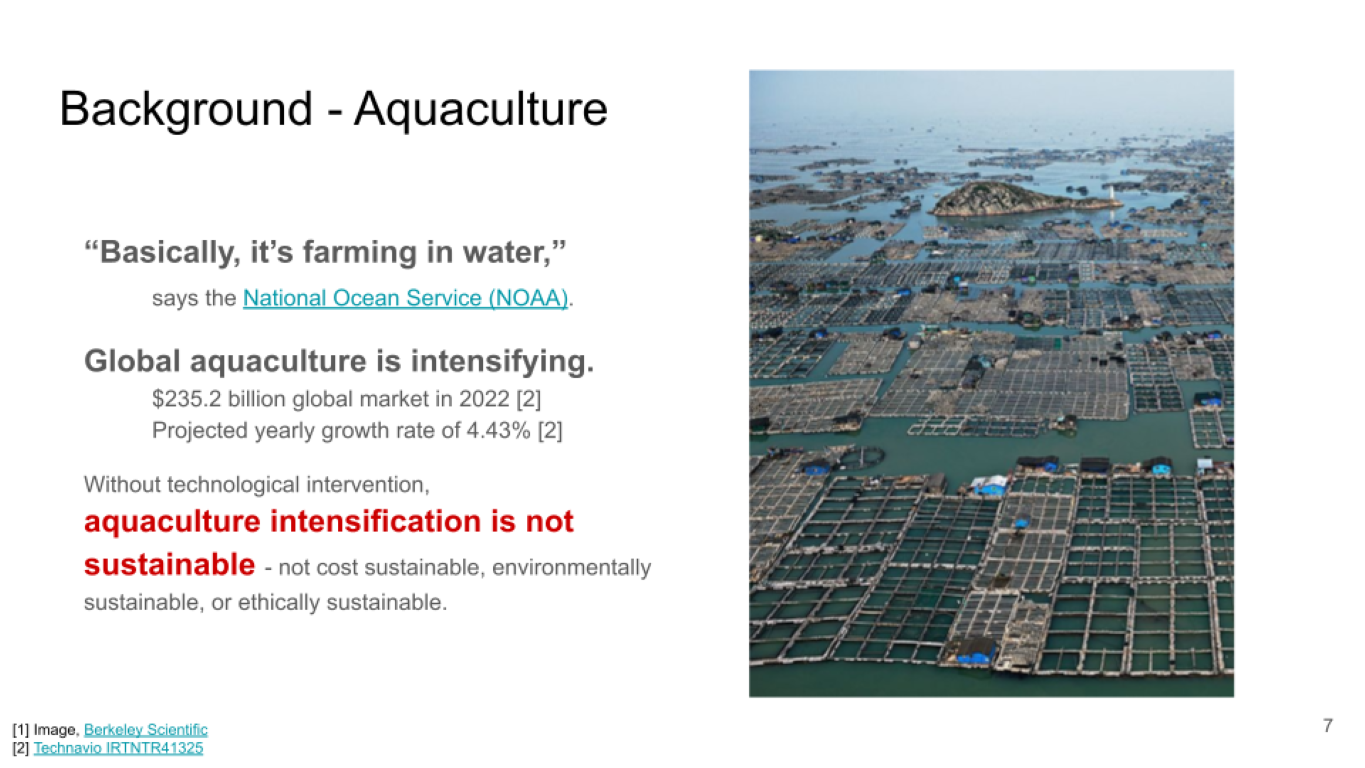
Each member of the team had different roles throughout the semester. One of my earlier roles was market identification, where I discovered the growing need for sustainable aquaculture.

After many calls with by Innovasea, we were reassured that automation, specifically in their waterborne fish feeding system was a logical path toward sustainable market growth. Moreover, this was a particular area of interest for Innovasea, who was seeking a means to quickly and reliably disperse waterborne fish food to multiple cages in an aquaulture installation.

FishFeed

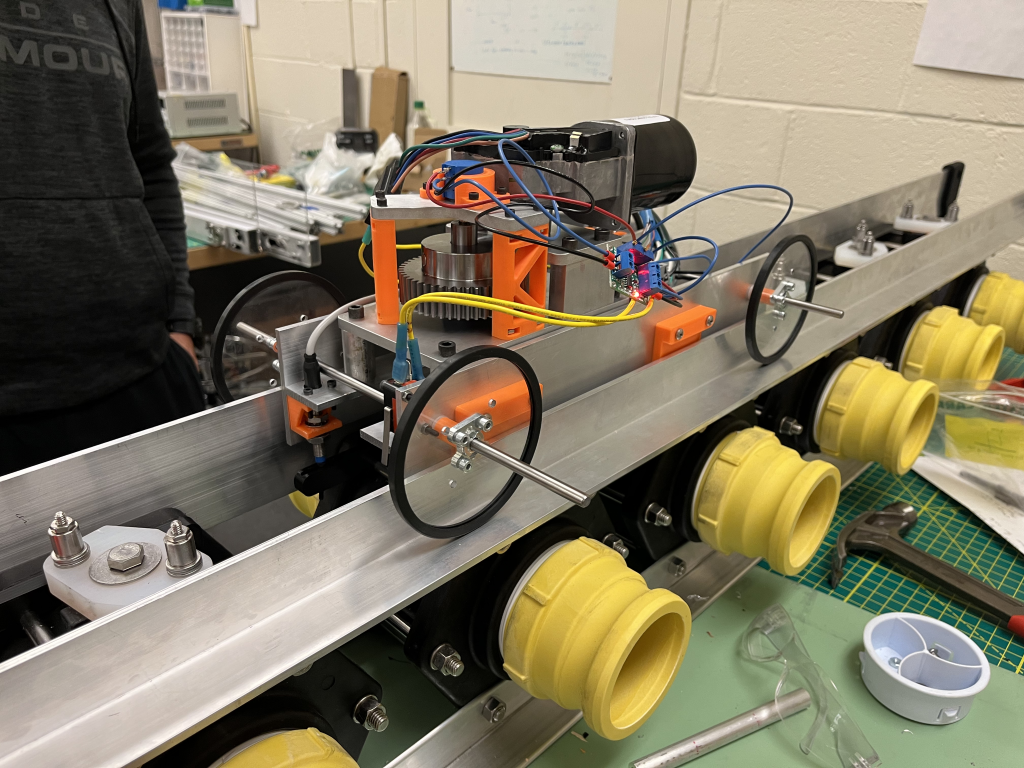
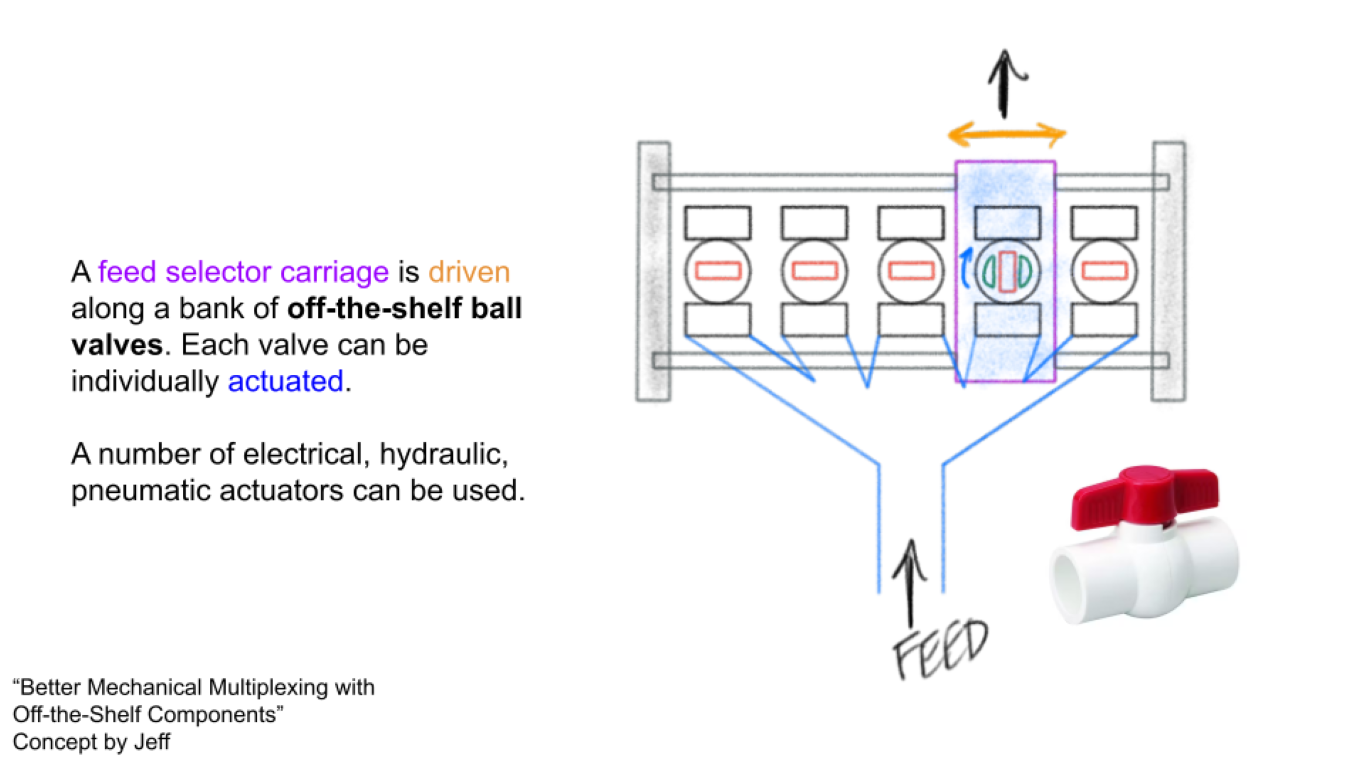
I was inspired by a YouTube video from Stuff Made Here to use principles of mechanical multiplexing in the final design for this "manifold selector valve." After considerable, productive debate amongst members of the team, this was selected as the final design concept.

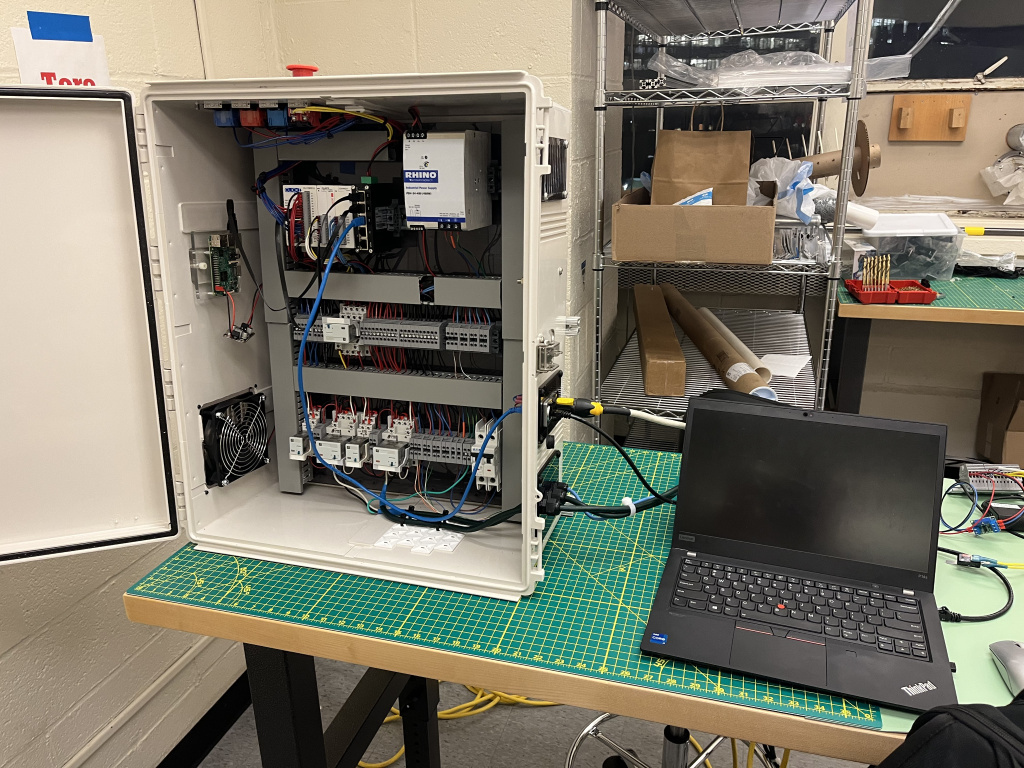
I reassured the team that I'd be able to build both a PLC control cabinet and use low cost actuator, namely a wiper motor, to accomplish the most critical tasks set by our functional requirements. Fortunately, we worked well together and each took on a substaintial portion of the design, fabrication, and testing.

Automation

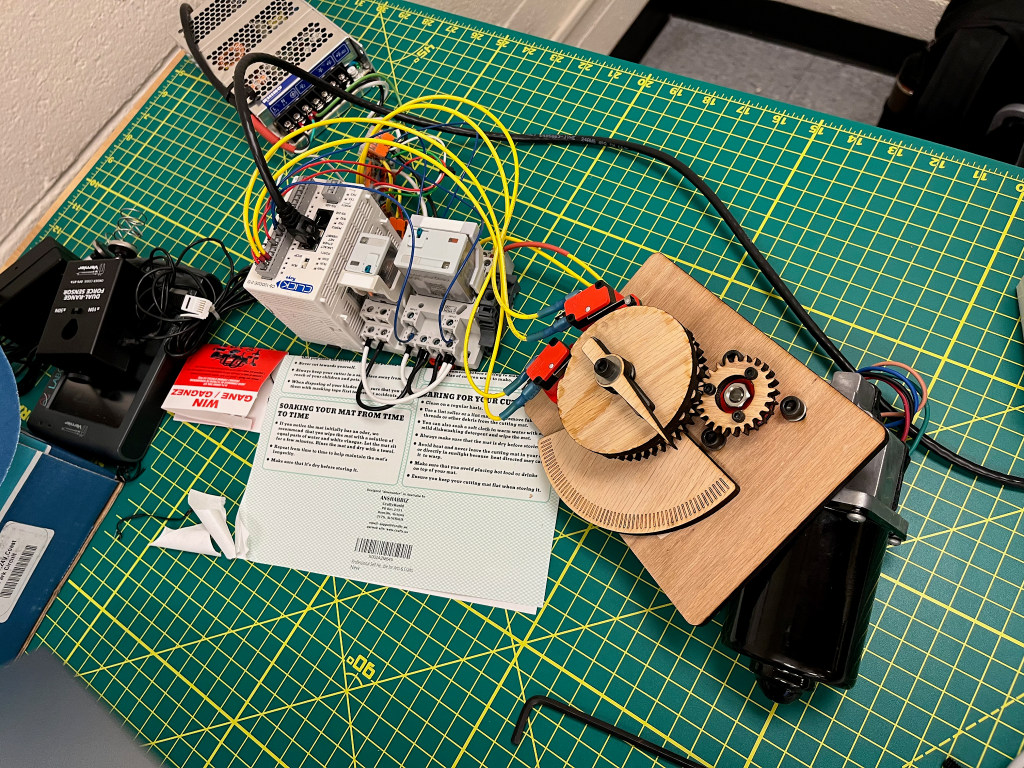
After a few quick sketches, my teammate Penelope and I were on the same page about the unit testing we'd need to do to verify the electromechanical subsystems in the final prototype. Most important was the function of the wiper motor along with a multi-turn potentiometer we used as an encoder.

Automation

The wiper motor operated as predicted by the engineering math I has used to originally select this motor. With its four-time safety factor, it easily overcame the 16 Nm of torque required to open and close the large, 3 inch diameter, off-the-shelf ball valves we were using in the final design. While I fabricated and tested the wiper actuator, the rest of the team was managing the fabrication of the frame and valve assembly.

Automation

I had closely worked with my teammate Penelope throughout the semester, leveraging my background as a technical instructor to give her the tools and background knowledge necessary to conduct simple tests on the PLC. Still, my background in industial automation became quite important toward the end of the project, as I finalized the control cabinet and wired each of the sensors. toward the end of the project. The PLC control and code was relatively simple, comprised of only...

  • Rotary Actuator (Wiper Motor) Power Relay
  • Rotary Actuator (Wiper Motor) Polarity Relay
  • Rotary Actuator Encoder (Potentiometer)
  • Linear Actuator (Gear Motor) Power Relay
  • Linear Actuator (Gear Motor) Polarity Relay
  • Linear Actuator Limit Switch
  • Linear Actuator Indexing Inductive Sensor

For our careful planning and diligent work, the prototype was finalized early, ahead of our original schedule, leaving plenty of time to prepare the final presentation. Below, you'll find a video of the final prototype completing a feeding sequence. From conception to protoype, this project proved to be a showcase of teamwork, collboration with partners, planning, engineering math, and background research.